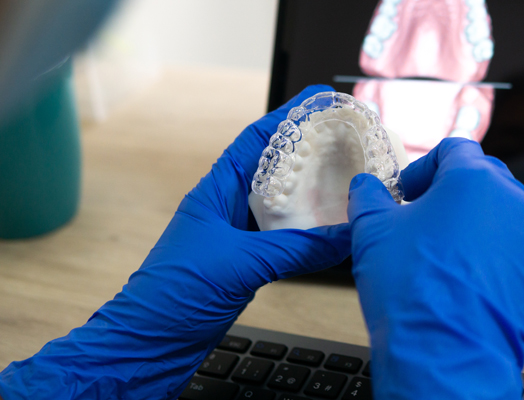
For adult with crooked teeth, traditional braces are not the only option for alignment and correction; Invisalign® is a proven system that straightens teeth almost invisibly. Some patients using this treatment may be particularly worried about how it will affect their eating habits or diet. The good news is that patients generally have very few changes that they need to make.
How Invisalign® works
The patient wears clear trays that are used to gently put pressure on the teeth, gradually moving them into a straight position. New trays are made every few weeks until the desired correction is reached.
While using these trays, called aligners, may seem easy, it does put more of the burden of success on the patient. Because they are removable, it is important that the patient listen carefully to the dentist’s instructions and follow them closely. Following good practices helps ensure that Invisalign® is successful and that it does not disrupt everyday activities like mealtimes.
Living with Invisalign®
Clear aligners make it possible to correct crooked teeth without the need for traditional metal braces. However, like with any medical procedure, it is important that the aligners are used correctly. Living with Invisalign® is typically easy if patients follow a few simple rules each day.
Wearing the aligners
The most important part of using aligner trays is wearing them for the appropriate amount of time. For optimal results, the aligners need to be worn for 20-22 hours. If worn for less time on a regular basis, desired results may take longer or even be impossible to achieve. Parents of children using Invisalign® should opt for the blue compliance indicator dots, which can reveal if the aligners are being worn for the correct number of hours each day.
Eating and drinking
While most of the day trays can be worn and mostly forgotten about, mealtime is a little different. The great thing about Invisalign® is that there are no restricted foods and drinks, unlike with traditional braces. Patients can eat and drink whatever they like, with one caveat: The aligners must be removed before eating and drinking anything besides water. Even with soft foods like yogurt or ice cream, trays need to be removed before partaking.
Some aligners have attachments to help secure them that are glued onto patient’s back molars. Care needs to be taken in this situation to avoid very hard or crunchy foods that could damage the attachment points. Another important rule to follow is to always brush and floss after eating and before putting the trays back. All food particles and residue need to be removed from teeth so that they do not get trapped under the trays, potentially causing tooth decay and gum disease. If there are no other options, patients should rinse their mouth thoroughly with water after eating and before replacing their aligners.
Conclusion
Invisalign® can be a great way to straighten your teeth with little impact on your overall lifestyle and appearance. The biggest difference to most daily routines will be removing the aligner trays for every meal and brushing and flossing afterward.
Are you considering Invisalign® in the Chattanooga area? Get more information at https://sceniccitydentistry.com.
Check out what others are saying about our dental services on Yelp: Invisalign in Chattanooga, TN.
Related Posts
A convenient alternative to traditional braces, Invisalign® uses a series of clear removable aligners that gradually shift teeth. The aligners are custom-made for each patient to fit their individual dental treatment plan. Invisalign® is intended for adults and teenagers with fully developed adult teeth. The aligners, also known as trays, are made of flexible BPA-free plastic…
Invisalign® is a teeth-straightening treatment that entails wearing sets of custom-made transparent aligners over the teeth. Unlike traditional metal braces that use wires and brackets, the aligners are removable, which means wearers can take them off when they want to eat or brush their teeth. Learn about these clear aligners and how they are used to…
Invisalign® therapy is a type of treatment that a general dentist offers to individuals who have crooked, crowded, or gapped teeth. Each of these problems requires the attention of a dentist because they can lead to severe oral health problems. Additionally, after Invisalign® treatment, one's smile will greatly improve, thus resulting in better confidence and self-esteem. When…
CEREC crowns offer a convenient way to restore a damaged tooth with a custom crown designed and made in a single visit. While they are similar in appearance and function to traditional dental crowns, they differ in the treatment process. Understanding the steps and aftercare helps the process feel simple and predictable.Like traditional crowns, CEREC…